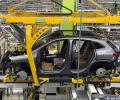
Automobile manufacturers are increasingly vocal about the mounting paperwork and delays associated with India's Production-Linked Incentive (PLI) scheme for the automotive sector, arguing that compliance requirements are becoming as challenging as meeting technical eligibility conditions. They are pushing for a simpler, faster, and more predictable certification and compliance framework.

The Indian government has allocated an additional 2 million tonnes of surplus broken rice from FCI stocks for its ethanol blending programme, while simultaneously issuing a detailed rebuttal to widespread misinformation regarding the E20 fuel, addressing concerns from water consumption to engine damage and environmental impact.

After a subdued start, the southwest monsoon has gathered pace since the beginning of July, narrowing the cumulative rainfall deficit from nearly 30 per cent on June 30 to around 15 per cent as of July 8.

As MGNREGA comes to a close, both critics and supporters keenly eye VB G RAM G's performance.

15 ships carrying essential raw materials successfully navigated the Strait of Hormuz, easing concerns over agricultural input availability.

India's domestic passenger vehicle sales experienced a robust 24.6 per cent year-on-year increase in June, propelled by favourable government policies like income tax relief and repo rate cuts, alongside resilient rural demand, even as global crude oil prices pose potential cost pressures.

The Delhi government has approved the Delhi EV Policy 2.0, which will phase out fresh registrations of internal combustion engine (ICE) two-wheelers and three-wheelers over the next two years, starting with a ban on ICE 3Ws and N1 category LCVs from January 1, 2027, and ICE 2Ws from April 1, 2028.

'We may be able to wind back some of the schedule reductions we'd taken in recent months.'

Water levels were even lower than the 10-year average in 27 reservoirs in eastern India and around 47 in southern India.

Automobile manufacturers have informed NITI Aayog that they face significant challenges in tracing 20-25-year-old vehicles due to multiple ownership changes, hindering their ability to meet Extended Producer Responsibility (EPR) targets for end-of-life vehicles (ELVs). They are seeking government support, including access to updated Vahan registration records, to locate these vehicles and encourage owners to use authorised scrapping centres.

The IMD is predicting close to a 60% probability of deficient rainfall, which means there is a strong possibility that the monsoon this year will be poor.

The start of the West Asia conflict has led to a sharp increase in crude-linked raw material prices, pushing up the price of helmets across the country.

The scheme, called 'Suhana Safar', targeted customers who aspire to own a car but were hesitant because of concerns around arranging the down payment or managing future EMI obligations.

Oil-marketing companies (OMCs) are set to significantly expand the sale of flex fuel (E85) across India, with plans to reach 5,000 outlets in major cities by the end of next year, according to Petroleum Minister Hardeep Singh Puri. This move aims to boost ethanol demand, reduce crude oil imports, and cut carbon emissions, coinciding with the launch of India's first flex-fuel vehicles by Maruti Suzuki and Hero MotoCorp.

Flex fuel motorcycles can deliver "3 per cent higher torque and 7 per cent higher peak power".

The support will be provided to oil-marketing companies (OMCs) in the form of interest-free advances through the ministry of petroleum and natural gas. The OMCs, in turn, will use the fund to provide ATF price stabilisation support to Indian carriers operating domestic and international flights.

Airlines are cutting not only international services but also domestic flights, especially on routes projected to remain unprofitable in the coming weeks due to weak demand and high fares.

"There is a sharp jump that we have seen in bookings of EVs... The jump, at least in our case, in just two months, it is about 2 to 2.5 times of what it used to be"

"Rather than worrying, preparation is required. Contingency plans will be made for affected districts and crop changes will be considered wherever necessary"

The Indian government has issued a stern warning to industrial users who are reportedly procuring cheaper retail fuel instead of industrial-grade fuel, leading to significant losses for state-run oil marketing companies (OMCs) and potential local shortages. This diversion, driven by a substantial price difference between retail and bulk diesel, is adversely impacting OMCs, which are absorbing daily losses of approximately 550 crore to keep retail prices stable.
